Creating an educational environment that acknowledges, respects, and incorporates students’ diverse cultural backgrounds into every aspect of learning is not just an option but a necessity. This approach involves understanding and valuing students’ cultural references in all facets of learning, including curriculum design, teaching strategies, and assessment practices. Such practices not only enhance academic success but also foster a sense of belonging and validation for students.
The Power of Culturally Responsive Teaching
Reflecting on my experience as a bilingual educator, I have witnessed firsthand the transformative power of culturally responsive teaching. Early in my career, I encountered a pivotal moment that shaped my teaching philosophy. During a science lesson, I struggled to engage my fifth-grade Hispanic students using the standard district curriculum and suggested teaching strategy. Realizing the material was not resonating, I decided to connect the lesson to their cultural background.
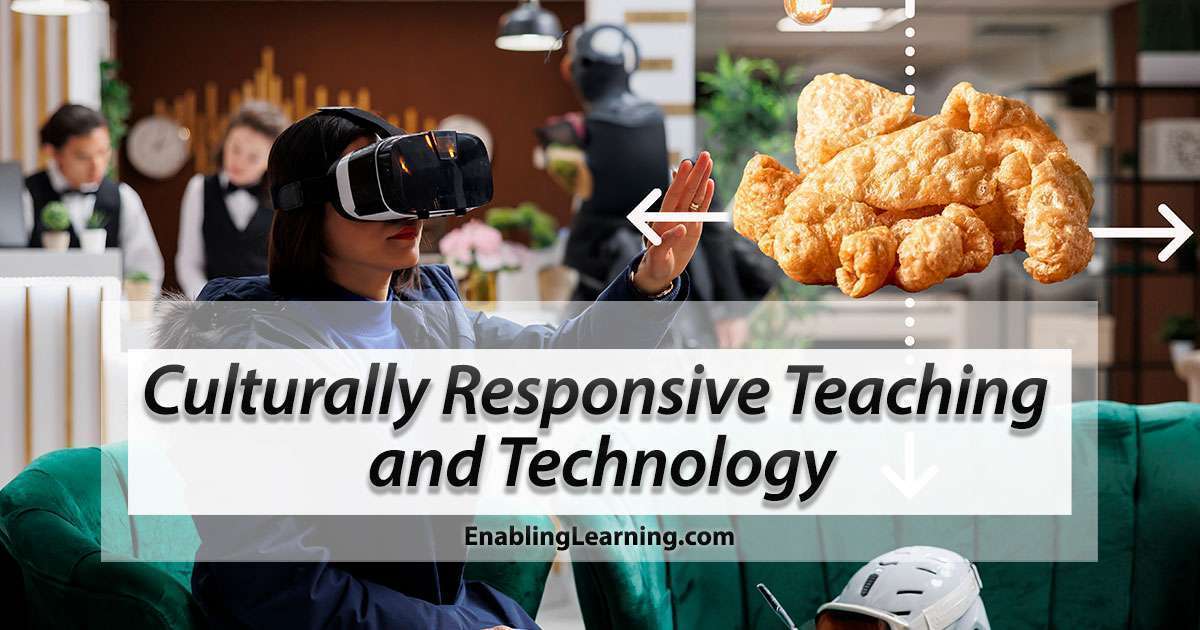
On a whim, I asked, “Who likes chicharrón (pork rinds)?” a comfort food that I also enjoy and is part of my cultural background. The enthusiastic response was overwhelming, and I seized the opportunity to make a cultural connection. I tasked the students with learning how chicharrón is made, prompting them to explore their cultural roots over the weekend. The following Monday, the classroom buzzed with excitement as students eagerly shared their newfound knowledge. This experience not only captured their interest but also allowed them to connect learning with their culture and daily life.
By relating a science topic to something as familiar and cherished as chicharrón, I created a bridge between their personal experiences and the scientific concepts they needed to learn. This type of meaningful learning, which links culture and language with academic content, is crucial for making lessons more accessible and memorable for students, especially those acquiring a second language.
Making Science Tangible Through Cultural Relevance
In this specific instance, I used the familiar process of making chicharrón to teach the concepts of physical and chemical changes. I asked the students, “Do you know what it is and how chicharrón is made?” When they didn’t know, I assigned them to find out over the weekend. On Monday, a student explained with great enthusiasm that chicharrón is the skin of a pig that is cooked in hot oil until it becomes hard and crispy.
Building on this explanation, I asked, “What happens if you leave the chicharrón in the hot oil after it is already cooked?” The student confidently replied, “It burns and becomes like a piece of coal.” This was my opportunity to draw a parallel to scientific concepts. I explained, “When you cook the pig’s skin, it starts to twist and become hard, which is a physical change. If we leave it in the hot oil after it is cooked, it burns and stops being chicharrón, becoming a piece of burned matter. That is, a chemical change.” After I made this connection and said those words, I could see understanding on the faces of all my students and hear a collective, “I get it now!!!”
This approach not only improved their understanding of the topic but also reinforced the idea that learning can and should be connected to their own experiences and prior knowledge. By using chicharrón, I was able to make abstract scientific concepts tangible and relevant to their everyday lives.
Evolution of Diversity in Education
Reflecting on the state of diversity in education, classrooms fifty years ago were often more homogeneous, with educational practices largely catering to the dominant culture. Diverse linguistic and cultural backgrounds were frequently overlooked, and there was less emphasis on inclusive and differentiated instruction. In contrast, today’s classrooms are vibrant tapestries of multicultural and multilingual students. There is a greater awareness and appreciation of diversity, and educational practices have evolved to become more inclusive and responsive to the needs of all students.
Technology’s Role in Supporting Diverse Learners
Technologies such as adaptive learning platforms and AI-driven tools are beginning to play a significant role in supporting diverse learning needs by providing personalized and contextually relevant learning experiences. For example, AI-powered virtual tutors can offer real-time feedback tailored to individual students’ linguistic and cultural backgrounds. These tools can help bridge gaps in understanding and provide students with the support they need to succeed academically.
Looking ahead fifty years, I think diversity in learning environments will continue to grow and become even more complex and multifaceted. Emerging technologies like generative AI, virtual reality (VR), and augmented reality (AR) will likely revolutionize how we approach education and assessment. These technologies have the potential to create immersive and personalized learning experiences that can cater to the unique cultural and linguistic backgrounds of each student. For example, VR and AR could be used to simulate real-world environments where students can practice language skills in culturally relevant contexts. Generative AI could provide instant, personalized feedback and support, helping students navigate their learning journeys more effectively.
Moreover, these technologies could help break down language barriers, allowing for more seamless communication and collaboration among students from different linguistic backgrounds. They could also enable more dynamic and interactive assessments that go beyond traditional testing methods, providing richer and more nuanced insights into students’ abilities and progress.
The Future of Culturally Responsive Assessment
The future of education demands teachers who are both culturally and assessment literate. Reliable and culturally responsive assessments are crucial for making informed instructional decisions that truly reflect the multifaceted abilities of our students. Transforming teacher training and preparation to include these aspects is essential to ensure that educators are equipped with the skills and knowledge necessary to implement assessments that are fair, comprehensive, and supportive of every student’s learning journey.
As part of the professional development of teachers, it is imperative to include the use of current and emerging technologies. By incorporating training on these new tools, educators can leverage their power to enhance both their teaching and professional lives. Technologies such as AI-driven assessment tools, virtual reality (VR), and augmented reality (AR) can provide personalized feedback, simulate real-world learning environments, and offer more dynamic and interactive assessment methods. By integrating technology into professional development, teachers will be better prepared to meet the diverse needs of their students and create more inclusive and effective educational environments.
Conclusion
Connecting students’ cultural backgrounds to their learning experiences is profoundly impactful in fostering engagement and understanding. The possibilities offered by AI-powered tools to create personalized learning spaces promise to support individual learning needs and enhance the inclusivity and accessibility of education for all students. By embracing diversity and leveraging technology, we can create a future where every student feels valued, understood, and empowered to succeed academically and beyond.
As educators, it is our responsibility to ensure that learning is not limited to textbooks but enriched through students’ cultures and daily experiences. By doing so, we can create a more inclusive, engaging, and effective educational environment that prepares all students for success in an increasingly diverse and technologically advanced world.
References:
- Duff, P. A. (2015). Transnationalism, multilingualism, and identity. Annual Review of Applied Linguistics, 35. https://doi.org/10.1017/S026719051400018X
- García, O., Kleifgen, J. A., & Falchi, L. (2008). From English Language Learners to Emergent Bilinguals. A Research Initiative of the Campaign for Educational Equity. Equity Matters: Research Review, 1(1).
- Gay, G. (2018). Culturally Responsive Teaching: Theory, Research, and Practice. Third Edition. Multicultural Education Series. Teachers College Press.
- Gudoniene, D., & Rutkauskiene, D. (2019). Virtual and augmented reality in education. Baltic Journal of Modern Computing, 7(2). https://doi.org/10.22364/bjmc.2019.7.2.07
- Gunay, R. (2014). Affirming Diversity: The Sociopolitical Context of Multicultural Education. Journal of Ethnic and Cultural Studies, 1(1). https://doi.org/10.29333/ejecs/2
- Hernández, L. (2023). Navigating the Bilingual Education Supplemental (164): A comprehensive preparation guide and practice exam. Enabling Learning LLC.
- Kiryakova, G., Angelova, N., & Yordanova, L. (2018). The potential of augmented reality to transform education into Smart education. TEM Journal, 7(3). https://doi.org/10.18421/TEM73-11
- Luo, X., Ren, S., & Zhang, Q. (2022). The Influence of Cultural Learning on Second Language Learning. Proceedings of the 2021 International Conference on Education, Language and Art (ICELA 2021), 637. https://doi.org/10.2991/assehr.k.220131.101
- Punar Özçelik, N., Yangin Ekşi, G., & Baturay, M. H. (2022). Augmented Reality (AR) in Language Learning: A Principled Review of 2017-2021. In Participatory Educational Research (Vol. 9, Issue 4). https://doi.org/10.17275/per.22.83.9.4