AI-Generated Audios
Earlier this spring, my wife and I celebrated our 20th wedding anniversary in Paris. It was a trip we had dreamed about, a chance to reconnect as a couple, enjoy La Ville Lumière, and rediscover its magic without the playful chaos of our two kids wandering around. Two years earlier, we had visited France as a family, and it had been an unforgettable, fantastic experience with our kids, but this time, it was just the two of us.
Still, as I walked the cobblestone streets and sat at café tables along the Seine, I couldn’t shake a quiet feeling of guilt. I missed my kids. My wife reminded me, gently and wisely, that this trip was for us and that it was okay to have our own time. She was right. But even as I embraced that, I found myself thinking about how I could bring some of Paris back to them, not just as souvenirs, but as an experience.
The Place That Lit the Fire
We had visited a charming little restaurant tucked away in the Montmartre district of Paris. A place so authentic it felt as though it had been frozen in time. The air was thick with the aroma of melting cheese and a whisper of woodsmoke, like a warm memory clinging to every beam. It wasn’t one of those sleek, modern cafés you see in tourist guides; this was a haven of old Paris. Soft, golden light flickered from tiny candles on each table, while a gentle wood fire glowed in the open kitchen, where tartines were toasted over flame and raclette grills were warmed with glowing briquettes. The whole room felt alive with warmth and intention, as if every element had a purpose in creating comfort.
At the heart of it all was a husband-and-wife team who moved with a rhythm only years of partnership could produce. The husband, sporting a twinkle of quiet pride, tended the Raclette grills with care, making sure the cheese melted just right. His wife moved with ease among the tightly packed tables, apron tied snug around her waist, delivering bubbling fondue pots and exchanging warm words with the regulars, in fast, musical French we could only half follow.
Everything about the place (its warmth, its simplicity, and its focus on good food) made it unforgettable. And as we sat there, smiling and full, I thought: What if I could bring this feeling home to my kids? With the help of ChatGPT, that idea came to life in ways I never imagined.
A Bistro at Home: Chez Louis
When we returned home from Paris, I couldn’t stop thinking about that little restaurant in Montmartre. So I opened ChatGPT and asked: Can you help me recreate a typical French restaurant experience, including a menu? Something authentic. Something Parisian. I also explained that I didn’t want just a list of French foods you’d find in a travel guide. I wanted real dishes, like the ones we actually ate, tartines toasted over flame, a salad with green beans and potatoes, rustic bread topped with bubbling cheese. I also told ChatGPT about the style of that restaurant in Montmartre.
I was also very specific: I didn’t want the kind of tourist-friendly menu you see in many Paris restaurants with tiny English translations tucked beneath each dish. I wanted my kids to experience the menu as we had: in French, full of unfamiliar words and beautiful mystery. I asked ChatGPT to craft descriptions in a truly Parisian style, authentic phrases that you’d see written in chalk on a bistro wall, not just textbook French. With that, I would encourage my kids to use their phones or iPads to look up the meanings and explore and decode the language on their own. I wanted it to be more than a delicious dinner; I wanted to create a linguistic adventure, powered by curiosity and technology. And that’s exactly what I got.
Then I needed a name for our new restaurant. When I first asked ChatGPT for help naming the place, it suggested Chez Louis, a name that sounded beautifully French (recognizing the French version of my name, Luis, in it), but I wasn’t entirely sure what chez meant. That moment turned into a learning experience for me, too. ChatGPT explained that chez is the French way of saying “at the home of” or “the place of,” a common and endearing phrase used in restaurant names. I loved it! When my kids first saw the menu title, they thought I had written “Chef Louis,” like a kitchen chef. But I used that moment to challenge them: I told them to look it up. Use the dictionary. Use their iPads and figure it out. And when they did, they lit up. For them, it was no longer just a menu; it was a puzzle, a riddle wrapped in culture.
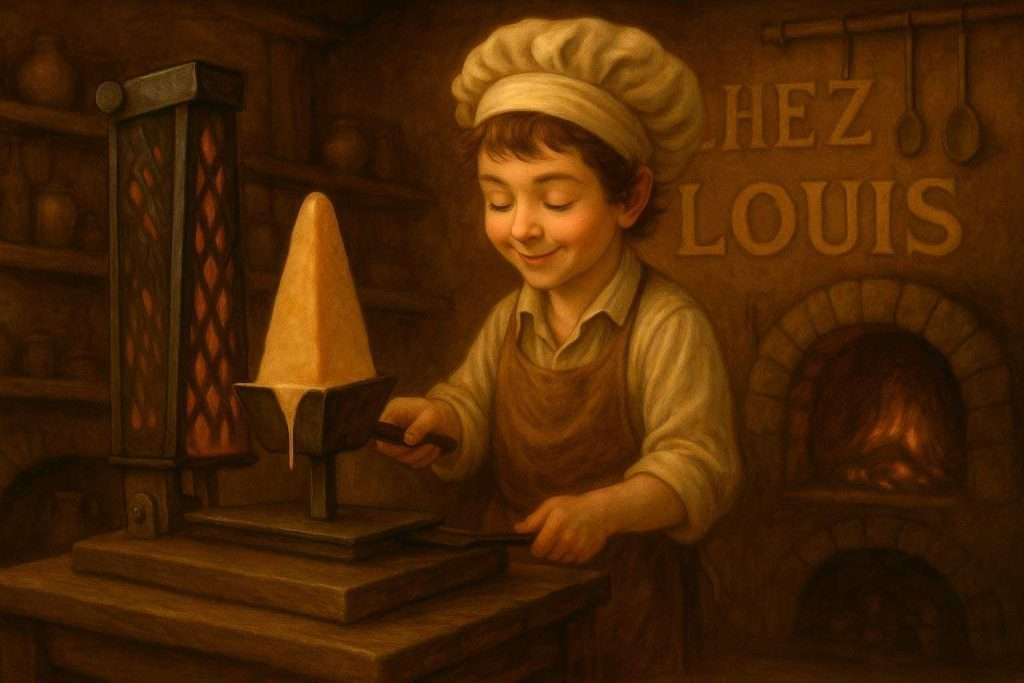
After getting the name for our home Bistro, I needed a story behind it, so I asked ChatGPT to create a background story for Chez Louis, loosely inspired by the movie Ratatouille, which we had all watched (and adored) before our first family trip to Paris. Then ChatGPT created a story about a boy and his secret culinary companion, a clever little rat named Petit Fromage!! It was magical! I printed along with the menu and used it as the basis for puzzles, a coloring sheet, and a full kids’ activity page that was also created by ChatGPT with a few instructions from my part. It felt just like the type of menu you’d find in a warm, welcoming Parisian restaurant, and I was genuinely impressed by the quality of everything ChatGPT helped generate, from the writing to the visuals.
I was also able to generate illustrations, printable order forms for the kids to select their drinks and tartines, and even step-by-step recipe cards in both French and English to guide me while cooking. I also had shopping lists prepared and an ambiance set with a French music playlist, which I played through Alexa using Amazon Music in the background. It became a full, immersive, creative, culture and language-rich experience, right in our kitchen.
Here you can download the full menu and activities.
The Power of Everyday Magic
My kids loved the whole experience! They took turns placing orders, choosing their drinks, and waiting for their tartines to be “served.” They asked what words meant, tried reading French aloud, and learned how simple, good food can be made with care. And my wife (who had encouraged me to enjoy Paris fully) smiled as she saw how it came home with us in a way that mattered.
This whole experience reminded me of something powerful: everyday moments can become magical learning opportunities when we let creativity and technology work together. Tools like ChatGPT are more than productivity assistants; they can be partners in storytelling, teaching, and parenting.
Whether you’re a parent, teacher, or simply someone who wants to make memories, I encourage you to try something like this. Recreate a place. Invent a story. Turn dinner into discovery. You don’t need a plane ticket to travel; you just need a little imagination and the right ingredients.
Speaking of ingredients, I’ve also put together a downloadable document that includes a simplified version of the full menu in English, the story of Chez Louis, a complete shopping list, easy directions for preparing each dish, and a short playlist of French songs to help you create the perfect bistro atmosphere. I’ve even added a link to the small tabletop grill I found on Amazon, which worked perfectly to replicate the melted cheese experience, without needing an expensive raclette machine.
Bienvenue à Chez Louis!